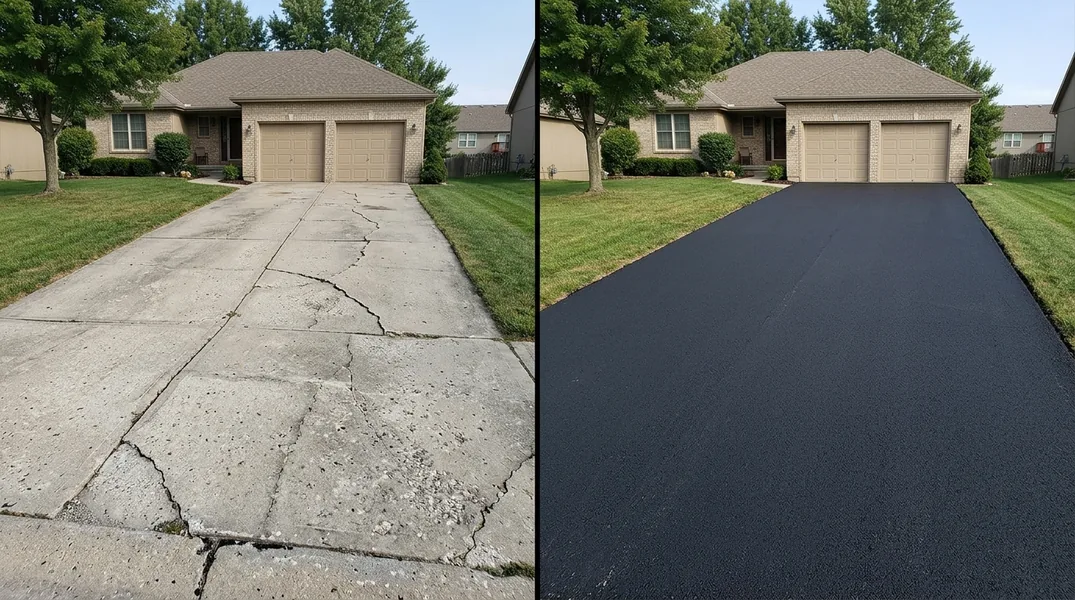
Understanding Kansas City's Unique Soil Challenges
If you own a home in Kansas City, you've likely noticed that driveways here seem to develop problems faster than in other parts of the country. The culprit isn't always poor installation or cheap materials. Instead, the real issue lies beneath the surface: the region's distinctive clay and shallow limestone geology creates an environment that is genuinely hostile to asphalt longevity.
Kansas City sits atop a layer of dense clay mixed with shallow limestone deposits. This combination becomes problematic when water infiltrates the base layers of your driveway. Clay expands when wet and contracts when dry, creating constant movement beneath the asphalt surface. Limestone, meanwhile, is susceptible to dissolution from acidic water and freeze-thaw cycles. Together, these geological realities mean your driveway faces pressures that homeowners in other regions simply don't encounter. Understanding this foundation problem is the first step toward making smart decisions about your driveway's future.
How Frost Heave Damages Your Asphalt Driveway
Frost heave is one of the most destructive forces acting on Kansas City driveways, particularly during the region's unpredictable winter months. This phenomenon occurs when water trapped in the soil beneath your driveway freezes and expands. Since water expands approximately 9 percent when it freezes, this pressure pushes upward on the asphalt layer with tremendous force. Over time, repeated freeze-thaw cycles cause the driveway surface to heave, buckle, and crack. What begins as a small upheaval can quickly develop into a major structural problem that compromises the entire driveway.
The damage from frost heave isn't always immediately visible, but it accelerates other failure modes. Once the asphalt cracks, water penetrates deeper into the base layers, creating more opportunities for ice formation and expansion. This vicious cycle means that a small heave problem this winter can become a significant Driveway Repair challenge by spring. Homeowners often mistake frost heave for settling or poor initial installation, but the reality is that our regional climate and soil composition make this problem nearly universal. If you've noticed your driveway surface rising or developing wavy patterns, frost heave is likely the cause.
Potholes and Cracking: The Visible Signs of Foundation Problems
Potholes don't appear randomly on your driveway. They're the visible result of the underlying clay and limestone foundation breaking down. When water seeps through cracks and reaches the base layer, it destabilizes the soil support structure. The asphalt loses its foundation and begins to crumble. Traffic and temperature changes then accelerate this deterioration, creating the distinctive bowl-shaped holes that frustrate homeowners throughout the region. Pothole Repair & Asphalt Patching can address individual holes, but it's crucial to understand that potholes are symptoms, not the root cause of your driveway's problems.
Cracking follows a similar pattern. Fine spider-web cracks often appear first, especially in spring after winter's freeze-thaw cycles. These cracks allow water to penetrate the asphalt layer and attack the base. Over months and years, the cracks widen and multiply. Alligator cracking (a pattern resembling alligator skin) indicates that the base has failed and the asphalt is breaking apart. At this stage, simple Pothole Repair & Asphalt Patching becomes insufficient. You'll need to evaluate whether Asphalt Resurfacing & Overlay or full replacement is the more cost-effective solution for your situation.
Repair or Replace: Making the Right Decision for Your Driveway
The question every Kansas City homeowner faces is whether to repair or replace their damaged asphalt. There's no one-size-fits-all answer, but understanding the progression of damage helps clarify your options. If your driveway shows isolated potholes or small cracks confined to one area, targeted Pothole Repair & Asphalt Patching may extend its life by several years. However, if cracks are widespread, multiple potholes exist across the surface, or you see significant heaving, repair becomes a temporary band-aid rather than a solution. In these cases, Asphalt Resurfacing & Overlay or full replacement often provides better long-term value.
Consider the age of your driveway as well. Most asphalt driveways last 15 to 20 years under ideal conditions, but Kansas City's soil and climate often reduce this timeline to 12 to 15 years. If your driveway is approaching or beyond this age, and you're seeing multiple damage signs, replacement may be more economical than repeated repairs. A new driveway built with proper base preparation and modern materials designed for our regional conditions will perform better and require less maintenance. Get a free estimate from Kansas City Asphalt Paving to evaluate your specific situation. Our team can assess whether your driveway is worth repairing or if replacement makes more financial sense for your property.
Protecting Your Driveway: Prevention and Maintenance Strategies
While you cannot change Kansas City's geology, you can significantly extend your driveway's life through proactive maintenance. The most important step is managing water. Ensure your driveway slopes properly so water runs off rather than pooling. Keep gutters and downspouts clear so roof runoff doesn't concentrate on your driveway. Seal cracks promptly, ideally each spring and fall, to prevent water from reaching the base layers. Sealcoating your entire driveway every two to three years provides an additional protective barrier against water infiltration and UV damage. These preventive measures won't eliminate frost heave or clay expansion, but they'll slow the deterioration process considerably.
Regular inspection is equally important. Walk your driveway at least twice a year, looking for new cracks, soft spots, or heaving. Catching problems early makes them cheaper and easier to address. If you notice significant changes or aren't sure whether your driveway needs professional attention, call Kansas City Asphalt Paving at (816) 710-5361 for a free assessment. Our experienced team understands the specific challenges that Kansas City's soil and climate create, and we can recommend the most appropriate maintenance or repair strategy for your property. Taking action before minor damage becomes major can save you thousands of dollars over time.
Professional Asphalt Driveway Solutions Near Me: Why Expertise Matters
Not all asphalt contractors understand the regional factors that make Kansas City driveways fail prematurely. Generic installation methods that work in other climates may not account for our clay-based soil and freeze-thaw cycles. When you choose Asphalt Driveway Paving & Installation with Kansas City Asphalt Paving, you're working with professionals who know exactly how to build driveways that withstand local conditions. Proper base preparation, appropriate material selection, and installation techniques designed for our region make a measurable difference in driveway longevity.
Whether you need Pothole Repair & Asphalt Patching, Asphalt Resurfacing & Overlay, or new Asphalt Driveway Paving & Installation, Kansas City Asphalt Paving delivers quality workmanship backed by local expertise. We've served homeowners throughout the region and understand the unique challenges your driveway faces. Contact us today at (816) 710-5361 or request a free estimate to discuss your driveway's condition and learn what solutions best fit your needs and budget.
Looking for a professional asphalt paving contractor in Kansas City? Kansas City Asphalt Paving responds fast for all your asphalt paving needs.
Get a Free Quote