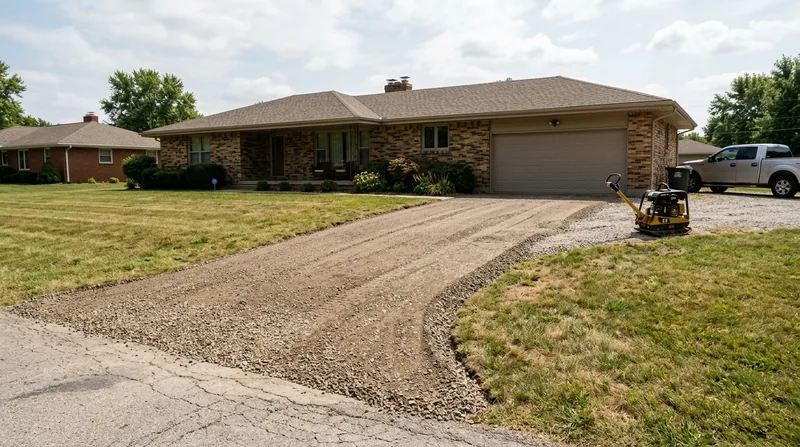




Gravel driveway installation and grading works well on the rolling, wider lots common across the Northland and South Kansas City, where the terrain and drainage patterns favor crushed stone over asphalt. The loess and silty clay that underlie Kansas City's neighborhoods swell and shrink through the seasons, and on sloped properties near the creek valleys that cut into the bluffs above the Missouri River, water management becomes critical. We grade and compact the base so water sheds properly, cutting washouts on sloped lots and establishing a stable, long-lasting foundation. Whether you own a ranch in Blue Springs, a property in Liberty with a longer drive, or a home on the rolling ground pushing toward Lee's Summit, proper grading keeps gravel from washing into the street and extends the life of your drive by years. We've been serving Kansas City and the surrounding counties since 2013, and we handle the full scope of base preparation, compaction, and drainage work that turns raw ground into a functional gravel drive.
Why Gravel Driveway Installation and Grading Matter in Kansas City's Terrain
Kansas City's geography is defined by creek valleys and the clay-rich soils that rest on limestone and shale. On the wider lots of the Northland and South Kansas City, gravel driveways remain a smart choice when properly built. The problem is not gravel itself, but the base underneath. Without proper grading and compaction, water pools on sloped lots, ruts form in spring, and material washes downhill into storm drains and neighbors' yards. The freeze-thaw cycles of a Kansas City winter, combined with the region's silty clay that moves constantly, demand a foundation that sheds water and resists settling.
- Improper grading creates washouts on sloped properties near creek valleys, requiring costly repairs each spring.
- Uncompacted base material settles unevenly, leaving ruts and low spots that trap water and accelerate deterioration.
- Correct grading and compaction extend gravel drive life by five to seven years, deferring the cost of replacement.
- Proper drainage protects adjacent properties and keeps material from migrating into municipal storm systems.
The difference between a gravel drive that holds up and one that fails is the work done before the stone is ever laid.
Key info: Kansas City's loess and silty clay swell and shrink through freeze-thaw cycles. A gravel driveway built on an uncompacted, poorly graded base will develop ruts and washouts within a season or two on sloped terrain. Proper base preparation is the single largest factor in how long a gravel drive lasts.
For more information on the full range of driveway solutions available in Kansas City, visit our homepage or explore asphalt driveway paving and installation as an alternative to gravel.
For permit and drainage requirements in your specific municipality, contact your local building department. The City of Kansas City, North Kansas City, Independence, and other jurisdictions in the region have different rules for driveway construction, drainage, and impervious surface limits.
How Gravel Driveway Installation and Grading Work in Kansas City
We start with a site visit to assess the slope, drainage patterns, and existing soil conditions. On the rolling ground of South Kansas City and the Northland, we cut the proper crown into the surface so water runs to the sides, not down the middle. We then compact the base in layers using heavy equipment, removing soft spots and unstable material. The result is a stable, well-draining foundation that resists settling and washout. For driveway extensions and aprons, the same principles apply, with careful attention to connecting new grading to existing grades.
- We assess the site slope, soil type, and drainage flow to determine the correct grading profile.
- We remove soft, unstable, or unsuitable material and excavate to the proper depth for base compaction.
- We compact the base in multiple passes using a heavy vibratory roller, achieving the density needed to resist settling.
- We establish proper crown and side slopes so water sheds away from the drive and surrounding structures.
- We place and spread the gravel material in a compacted layer, leaving a finished surface ready for use.
The entire process ensures that your gravel drive will remain stable and functional for years, even on the sloped terrain common in Kansas City's older neighborhoods and newer subdivisions.
Example: A property in Brookside with a long driveway sloping toward a creek valley needed grading and compaction work before gravel could be laid. We cut a proper crown, compacted the base in layers, and established side slopes that direct water away from the home. The result is a gravel drive that sheds water, resists ruts, and has held up through multiple Kansas City winters without washout.
| Approach | Description | Best for |
|---|---|---|
| Full Grading and Compaction | Excavate to proper depth, remove unsuitable material, compact base in multiple passes, establish crown and side slopes, place finished gravel. | New gravel driveways on sloped or uneven terrain, properties with poor drainage or washout history. |
| Re-grading and Re-compaction | Scarify existing gravel, remove ruts and low spots, re-compact the base, restore proper crown and drainage, add fresh gravel as needed. | Existing gravel driveways showing washout, rutting, or settling but with a sound base still present. |
| Grading and Stabilization Layer | Grade and compact the base, then install a stabilization layer (recycled asphalt millings or recycled asphalt) before topping with gravel to extend life and reduce washout. | Properties with steep slopes, high-traffic gravel drives, or a history of rapid material loss to weather and use. |
| Culvert and Drainage Work | Grade the drive and install or repair culverts, swales, and drainage features so water flows away from structures and the road surface. | Driveways crossing drainage areas, properties with water management issues, or those near creek valleys. |
Gravel Driveway Installation and Grading Cost in Kansas City: What to Expect
Gravel driveway installation and grading costs in Kansas City range from $950 for a small, straightforward residential drive to several thousand dollars for larger properties with complex drainage or extensive excavation. The primary factors that affect price are the size of the driveway, the slope and drainage challenges of your property, the depth of excavation and compaction required, and whether culverts or drainage structures are needed. On the rolling terrain of the Northland and South Kansas City, sloped lots typically require more grading work than flat ground, which increases the cost. A property in Liberty or Lee's Summit with a long drive and significant elevation change will cost more than a shorter, flatter drive in Raytown or Gladstone. We provide a written estimate that specifies the tonnage of material, the depth of base compaction, and the work scope so you know exactly what you are paying for.
The best way to understand your specific cost is to request a free estimate. We measure your property, assess the grading and drainage work needed, and provide a detailed quote within 24 hours. We recommend getting 2 to 3 estimates from local contractors so you can compare scope, materials, and price. For more detailed pricing information across all our services, visit our pricing page.
What to Look for When Hiring a Gravel Driveway Contractor Near Me in Kansas City
Finding a trustworthy gravel driveway contractor near you in Kansas City starts with verifying that the company is fully insured and has been in business locally for several years. We've served Kansas City and the surrounding counties since 2013, and we maintain full insurance coverage. Licensing and permit requirements are set by your municipality, so contact your local building department to understand what is required in your city or village. Ask any contractor for references from recent jobs, and follow up with those homeowners to confirm the quality of the work and whether the drive has held up.
- Verify that the contractor is fully insured and carries general liability coverage for the work.
- Ask how long the company has been in business locally and request references from recent gravel driveway jobs.
- Get a written estimate that specifies the tonnage of material, the depth and type of base work, and the labor and equipment costs.
- Confirm that your municipality requires a permit for driveway grading or construction, and ask the contractor to help you navigate the permitting process.
- Understand your HOA's rules if you live in a master-planned community, as some associations restrict driveway materials or require approval before work begins.
- Before any excavation, ensure that Missouri 811 utility locates have been called so underground lines are marked and protected.
Beware of unsolicited door-to-door offers, contractors without a local address or phone number, requests for large cash deposits, or prices that seem too good to be true. A reputable local contractor will provide a written contract, a clear timeline, and a realistic estimate based on a site visit. For a free estimate from Kansas City Asphalt Paving, contact us today at (816) 710-5361.
Gravel Driveway Installation & Grading in Kansas City: Pricing Guide
| Service | Price | Details |
|---|---|---|
| Small Residential Gravel Drive (under 500 sq ft) | Starting at $950 | Grading, compaction, and gravel placement on level or gently sloped terrain with minimal excavation required. |
| Standard Residential Gravel Drive (500 to 1,200 sq ft) | Starting at $1,400 | Full grading, multi-pass compaction, crown and side slope establishment, and finished gravel on rolling terrain typical of Kansas City neighborhoods. |
| Large or Complex Gravel Drive (1,200+ sq ft or steep slope) | Starting at $2,200 | Extensive excavation, deep base compaction, drainage or culvert work, and stabilization layers on sloped properties near creek valleys. |
| Re-grading and Re-compaction of Existing Drive | Starting at $750 | Scarification, rut repair, base re-compaction, and fresh gravel for driveways with settling or washout but sound underlying material. |
| Travel | Included | No separate charge or mileage fee within Kansas City and surrounding service areas across Jackson, Clay, Cass, and Platte counties. |
| Free Estimate | No charge | Written estimate with tonnage and depth specs provided within 24 hours at (816) 710-5361, no obligation to book. |
Indicative pricing, the exact cost depends on square footage, finish, and site access. Free personalized estimate within 24h at (816) 710-5361.


