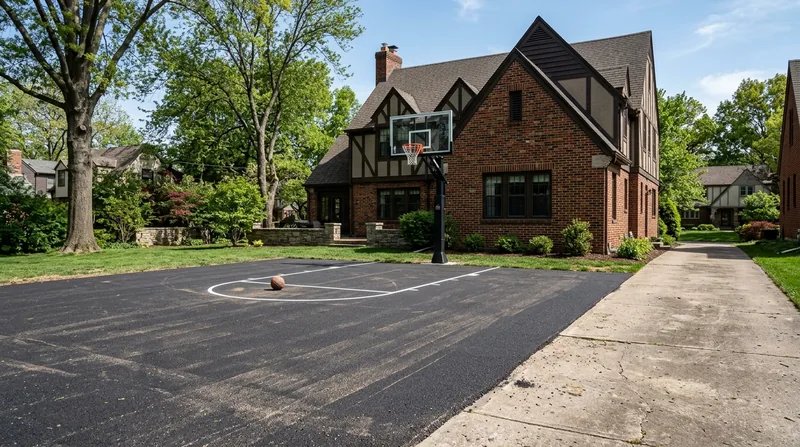




Sports court and path paving in Kansas City demands a foundation that stands up to the region's clay soils, freeze-thaw cycles, and the constant seasonal movement that buckles and cracks ordinary surfaces. Kansas City's older neighborhoods in Brookside, Waldo, and the Plaza sit on wind-blown loess and silty clay resting above limestone that swells and shrinks through the year, while South Kansas City and the Northland carry mid-century ranches on wider, flatter ground that still drains toward the same creek bottoms. A properly graded and compacted asphalt court or path holds flat through those swings, resisting the heave and alligator cracking that plague poorly prepared surfaces. We grade, compact, and pave smooth surfaces for basketball courts, tennis courts, and walking paths that stay true through Kansas City's winters and hold up to regular use season after season.
Why Sports Court and Path Paving Matters in Kansas City's Climate
Kansas City's freeze-thaw cycle and clay movement are the two enemies of any flat, smooth surface. Winter temperatures swing above and below freezing dozens of times between December and March, and the clay beneath driveways and courts expands when wet and contracts when dry. A court or path built on an inadequate base will heave, crack, and develop ruts within a few seasons. A properly prepared base with correct compaction and drainage prevents that failure and keeps the playing surface level and safe.
- Inadequate base preparation allows frost heave and settlement that cracks asphalt and creates uneven playing surfaces.
- Proper grading and compaction of the subgrade and aggregate base resist the clay's seasonal swelling and shrinking.
- Correct thickness and asphalt quality ensure the court surface stays flat and safe through years of use and Kansas City winters.
- Drainage design keeps water from pooling beneath the surface, where it accelerates freeze-thaw damage and base failure.
Courts and paths that receive proper base work and paving hold their surface integrity and remain playable and safe for the long term.
Key info: A tennis or basketball court in Lee's Summit, Raytown, or North Kansas City built on clay without a compacted aggregate base will show heave and cracking within two to three seasons. The cost to rebuild that court later exceeds the cost of proper preparation now.
Verify local permitting and grading requirements with your city or village building department. Many Kansas City jurisdictions require a grading or drainage plan for courts and paths, especially on sloped lots or in areas with stormwater rules. See your local code or call the building department before work begins.
How We Build Sports Courts and Paths in Kansas City
Our process starts with a site visit to assess the existing grade, drainage, soil type, and the depth of any existing base. Kansas City's loess and clay require careful grading and compaction to create a stable foundation. We establish proper slope for drainage, compact the subgrade, lay and compact an aggregate base to the thickness needed for the court or path use, and then pave a smooth asphalt surface. The entire sequence matters: shortcuts in base prep lead to failure, and we build to last.
- We assess the site, measure the area, and determine the existing grade and drainage pattern.
- We grade and compact the subgrade to remove soft spots and ensure uniform support across the court or path.
- We lay and compact a compacted aggregate base of the thickness required for the court's use and Kansas City's frost line.
- We proof-roll the base to verify compaction and identify any soft spots before paving.
- We pave a smooth, uniform asphalt surface with proper slope for drainage and finish to the dimensions and thickness specified.
The result is a court or path that stays flat, remains safe, and resists the freeze-thaw and clay movement that would otherwise crack and heave it within a few years.
Example: A half-court basketball pad in Kansas City's Waldo neighborhood required 4 inches of compacted asphalt over 6 inches of compacted 57 stone base, set on a properly graded and compacted subgrade sloped to drain toward the street. The pad stayed flat and played true through three Kansas City winters and regular use by neighborhood kids.
For more information on how we approach site preparation and base work, see our page on gravel driveway installation and grading, which covers the same foundation principles.
Sports Court and Path Paving Methods and Materials
| Approach | Description | Best for |
|---|---|---|
| Full-depth asphalt court | Grade and compact subgrade, lay compacted aggregate base, pave 3 to 4 inches of hot mix asphalt, finish to exact dimensions and slope. | New tennis courts, basketball courts, and multi-use pads on clay or uneven ground in Kansas City and surrounding areas. |
| Walking and recreation paths | Grade and compact subgrade, lay 4 to 6 inches of compacted aggregate base, pave 2 to 3 inches of asphalt with proper slope for drainage. | Neighborhood walking paths, community garden access roads, and light-use recreation paths that must resist Kansas City freeze-thaw and clay movement. |
| Overlay on existing base | If the existing base is sound and level, mill or remove the old surface and pave new asphalt over the compacted subgrade. | Resurfacing an existing court or path that has failed asphalt but a stable base, saving cost and time compared to full-depth replacement. |
| Drainage and grading work | Establish proper slope, install or repair swales or culverts, and compact base to shed water away from the court or path. | Courts and paths on sloped or poorly draining ground where water pooling or subsurface saturation would accelerate freeze-thaw failure. |
Sports Court and Path Paving Cost in Kansas City: What to Expect
A new asphalt court or path in Kansas City starts at $8,500 for a small half-court or short walking path on prepared ground. Larger courts, deeper base work, and extensive grading push the cost higher. A full basketball court with proper base and paving typically runs $15,000 to $25,000 depending on site conditions, dimensions, and the depth of base required by Kansas City's frost line and clay soils. A tennis court, which demands more precise dimensions and a thicker, more stable base, typically runs $20,000 to $35,000. Walking paths are often quoted by the linear foot and depend on width, length, and the existing grade.
The factors that move cost are straightforward: site grade and drainage (a sloped lot with poor drainage requires more grading and base work), base depth (Kansas City's 36-inch frost line and clay movement often require 6 to 8 inches of compacted aggregate), asphalt thickness (courts and heavy-use paths need thicker paving than light-use surfaces), and area size (larger courts cost more in material and labor). Getting written estimates from two or three local contractors ensures you understand what you are paying for and why prices differ.
See our full pricing page for detailed breakdowns by service type, and call us at (816) 710-5361 for a free estimate tailored to your site and court or path design.
Sports Court and Path Paving Near Me: What Kansas City Homeowners Should Know When Hiring a Contractor
Hiring the right contractor for a court or path means checking credentials, understanding the scope of work, and verifying that the contractor knows Kansas City's soil and climate. Licensing and permit requirements for paving vary by city and village across the Kansas City metro area, so start by calling your local building department to learn what is required in your jurisdiction. Many Kansas City cities require a grading permit or a drainage plan for courts and paths, especially on sloped or poorly draining lots. Ask any contractor you interview whether they have pulled the necessary permits and whether they are fully insured. Request references from recent court and path projects in Kansas City, and ask to see photographs or visit completed work if possible.
- Verify that the contractor is fully insured and ask to see a current certificate of insurance.
- Ask for a written estimate that includes the area, base thickness, asphalt thickness, and tonnage of material.
- Check references from recent court and path projects, especially on clay soils or sloped ground in Kansas City neighborhoods.
- Understand the drainage plan and how the contractor will handle water on and beneath the court or path.
- Confirm that the contractor will call Missouri 811 before any excavation or grading work begins, as required by law.
- If you are in an HOA or master-planned community, verify that the court or path design and materials meet architectural standards before work starts.
A local contractor with experience on Kansas City clay and experience building courts and paths that survive the freeze-thaw cycle is your best protection against costly failure and rework.
Call us at (816) 710-5361 or contact us online for a free estimate and to discuss your court or path project in detail.
Sports Court & Path Paving in Kansas City: Pricing Guide
| Service | Price | Details |
|---|---|---|
| Small half-court or short path | Starting at $8,500 | 3 to 4 inches of asphalt over compacted aggregate base, site grading and prep included for prepared ground |
| Full basketball court | Starting at $15,000 | Full-size court with compacted base and proper drainage, cost rises with site grading needs and frost-line depth |
| Tennis court | Starting at $20,000 | Precise dimensions and thicker base required for play standards, grading and drainage work based on site slope |
| Walking or recreation path | $18 to $25 per linear foot | Width, length, and existing grade determine final cost; includes base prep and asphalt finish |
| Complex site with extensive grading | On estimate | Sloped or poorly draining lots, soil replacement, or drainage installation require site visit before pricing |
| Free estimate | No obligation | Response within 24 hours at (816) 710-5361, includes site assessment and written proposal with tonnage |
Indicative pricing, the exact cost depends on square footage, finish, and site access. Free personalized estimate within 24h at (816) 710-5361.


