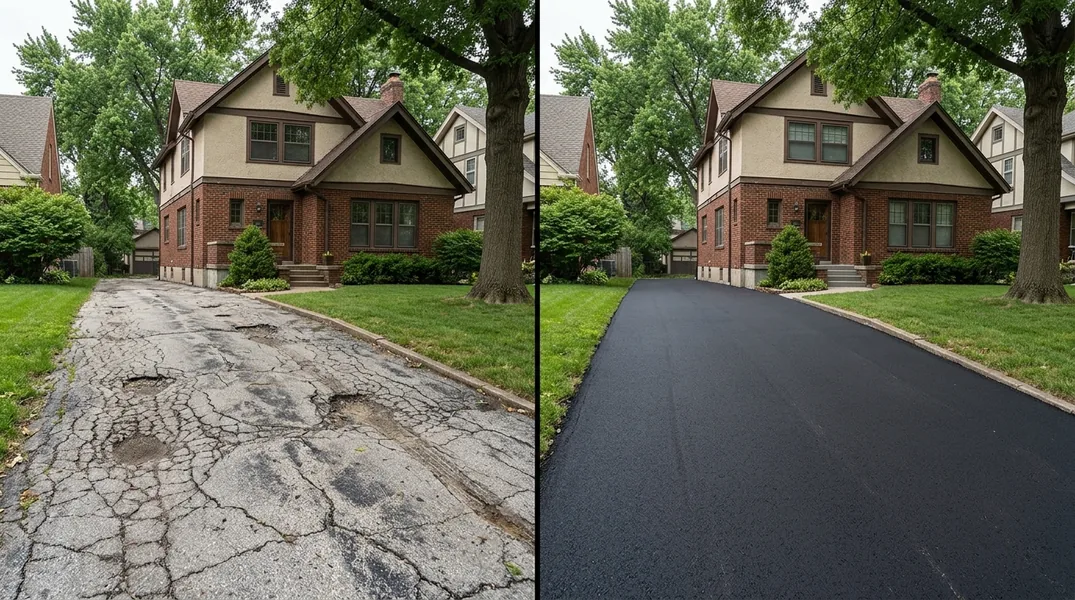
Asphalt vs Concrete Driveways in Kansas City: Understanding Your Climate
When you're deciding between asphalt and concrete for your driveway in Kansas City, climate and soil conditions are your first considerations. The Midwest presents unique challenges that directly impact how long your driveway will last and how much maintenance it will require. Kansas City experiences significant freeze-thaw cycles during winter months, with temperatures dropping well below freezing and then warming up again. This repeated expansion and contraction can be brutal on both materials, but they respond differently to these stresses.
The clay-heavy soil common throughout Kansas City and surrounding areas adds another layer of complexity. Clay expands when wet and contracts when dry, creating movement beneath your driveway. Concrete, being rigid and inflexible, can crack under this pressure. Asphalt, by contrast, has more give and flexibility, allowing it to move slightly with the soil beneath it. Understanding these regional factors will help you make an informed decision that accounts for the specific environmental pressures your driveway will face year-round.
How Freeze-Thaw Cycles Damage Concrete Driveways
Concrete driveways are particularly vulnerable to the freeze-thaw cycle that occurs regularly in Kansas City winters. When water seeps into small cracks or pores in concrete, it expands as it freezes. This expansion creates internal pressure that forces the concrete apart, widening existing cracks and creating new ones. Over several winters, this repeated cycle can cause significant structural damage, including spalling (surface deterioration), deep cracks, and eventually sections of concrete breaking away entirely.
Once the concrete begins to crack, the problem accelerates. Water penetrates deeper into the cracks, and salt applied for de-icing purposes enters those fissures, accelerating the deterioration process. Homeowners with concrete driveways in Kansas City often find themselves dealing with costly repairs or complete replacement within 20 to 30 years. The rigid nature of concrete means it cannot adapt to the movement caused by freeze-thaw cycles and clay soil expansion, making it less forgiving than more flexible alternatives in this climate.
Why Asphalt Performs Better in Kansas City's Climate
Asphalt Driveway Paving & Installation has become the preferred choice for Kansas City homeowners precisely because asphalt handles our regional climate more effectively than concrete. The flexibility of asphalt allows it to expand and contract with temperature changes without cracking as easily. When freeze-thaw cycles occur, asphalt can move slightly, accommodating the stress rather than resisting it. Similarly, when clay soil beneath your driveway shifts and settles, asphalt adapts better than rigid concrete, reducing the likelihood of major structural failure.
The asphalt driveway lifespan in Kansas City typically ranges from 15 to 20 years with proper maintenance, compared to 20 to 30 years for concrete (though concrete requires less frequent maintenance once installed). However, asphalt's flexibility means you're less likely to experience sudden, catastrophic failures. Instead, you'll notice gradual wear that can be addressed through preventative maintenance like seal coating and timely Driveway Repair before small issues become major problems. This proactive approach often costs less overall than dealing with the sudden concrete cracks and spalling that plague concrete driveways in freeze-thaw climates.
Asphalt Over Concrete Driveway: Is It a Good Solution?
Some homeowners in Kansas City consider placing asphalt over an existing concrete driveway as a cost-saving measure. This approach, sometimes called an overlay, can work in certain situations, but it's not always the best long-term solution. If your concrete is in relatively good condition with only minor cracks and no significant settling, asphalt overlay can extend the life of your driveway and improve its appearance. The asphalt layer provides a fresh surface and some additional protection from the elements.
However, there are important limitations to consider. If your concrete base is severely cracked, settled unevenly, or showing signs of structural failure, placing asphalt over it is merely masking the underlying problem. The concrete will continue to deteriorate beneath the asphalt, and the asphalt layer will eventually crack and fail as the concrete base shifts. Additionally, the asphalt-over-concrete approach creates a thinner overall system that may not perform as well as a full-depth asphalt installation. Before deciding on an overlay, have a professional evaluate your concrete's condition. Kansas City Asphalt Paving can assess your driveway and recommend whether an overlay makes sense or if a complete replacement is the better investment.
Asphalt Driveway Paving & Installation Cost in Kansas City: What to Budget
When comparing asphalt and concrete driveways, initial installation pricing is often a deciding factor for homeowners. Generally, asphalt has a lower upfront cost than concrete. A typical asphalt driveway installation in Kansas City ranges from $3 to $5 per square foot, while concrete typically costs $4 to $8 per square foot or more, depending on finishing options and site conditions. For a standard two-car driveway of approximately 600 square feet, you might expect to pay $1,800 to $3,000 for asphalt versus $2,400 to $4,800 for concrete.
However, the total cost of ownership extends beyond installation. While concrete requires less frequent maintenance, asphalt requires regular seal coating (typically every 2 to 3 years) and periodic Pothole Repair & Asphalt Patching to maintain its condition and extend its lifespan. These maintenance costs should be factored into your budget. Additionally, if concrete cracks severely due to freeze-thaw cycles or soil movement, repair costs can be substantial. Asphalt's flexibility often means repairs are less catastrophic and more affordable when needed. For a detailed breakdown of costs specific to your property and preferred material, contact Kansas City Asphalt Paving at (816) 710-5361 or request a free estimate.
Blacktop Driveway Maintenance: Keeping Your Asphalt Investment Protected
A blacktop driveway requires consistent maintenance to maximize its lifespan and protect your investment. The most important maintenance task is seal coating, which creates a protective barrier against UV rays, water penetration, and oxidation. In Kansas City's climate, seal coating every 2 to 3 years helps prevent the freeze-thaw damage that can cause cracks and deterioration. Seal coating also keeps your driveway looking fresh and black rather than faded and gray, maintaining your home's curb appeal.
Beyond seal coating, address small cracks and potholes promptly. What starts as a minor crack can quickly become a larger problem when water seeps in and freezes during winter. Asphalt Resurfacing & Overlay services can restore a driveway that's showing significant wear across its surface, while targeted Pothole Repair & Asphalt Patching addresses localized damage. Regular sweeping to remove debris and prompt attention to standing water also help extend your blacktop driveway's life. By staying on top of maintenance, you can often keep an asphalt driveway functional for 20 years or more, making it an economical choice over the long term.
Looking for a professional asphalt paving contractor in Kansas City? Kansas City Asphalt Paving responds fast for all your asphalt paving needs.
Get a Free Quote